Small businesses, non-profits, and government teams have something in common: they have always had more work than resources. They deliver services that make society function. These are the organizations and institutions providing services that cannot pause. And for most of their history, they have done this with the least access to the resources like software tools that could help.
That is what makes this moment so significant. AI is not just another enterprise upgrade. For the first time, the cost of entry is low enough and the capability is broad enough that organizations delivering essential public services can access the same advantages that were previously reserved for well-funded private sector teams. For no-fail services, adoption must be deliberate.
The opportunity is enormous
The application of AI to public service, community organizations, and small businesses is not a nice-to-have. It is a chance to close a gap that has existed for decades. These are the organizations processing permits, managing caseloads, coordinating volunteers, and writing grant reports by hand. The volume of work has always outpaced the staffing, and the tools available have always lagged behind what the private sector could afford.
AI changes that equation. Tasks that used to require dedicated analysts or expensive software platforms can now be handled by a team member who knows how to use the right tool with the right prompt. Report generation, data synthesis, policy drafting, communications. All of these become faster and more consistent when people have the skills to use AI effectively.
A more efficient non-profit serves more people. A more efficient government team processes more applications. A more efficient small business survives longer and hires more. The downstream effects are real.
Delivering services that cannot stop, cannot fail
In the business world, a brand new company built on these technologies from day one will absolutely outpace an established company still running on old systems and slow to change. That is the nature of competition. But government is not a competitive market. You cannot start a new municipality from scratch. You cannot launch a startup version of a child welfare agency. The institutions we have are the ones that need to be improved, and they need to keep running while the improvement happens.
A startup can rip out its entire tech stack over a weekend. A venture-backed company can tell its team to figure out a new system by Monday. These organizations cannot do that, and should not try.
The services delivered by government agencies, non-profits, and essential small businesses are often critical. People depend on them. Permits need to be processed. Case files need to be maintained. Emergency services need to be coordinated. Payroll needs to run. There is no acceptable version of "we're migrating systems, so services will be down for a few weeks."
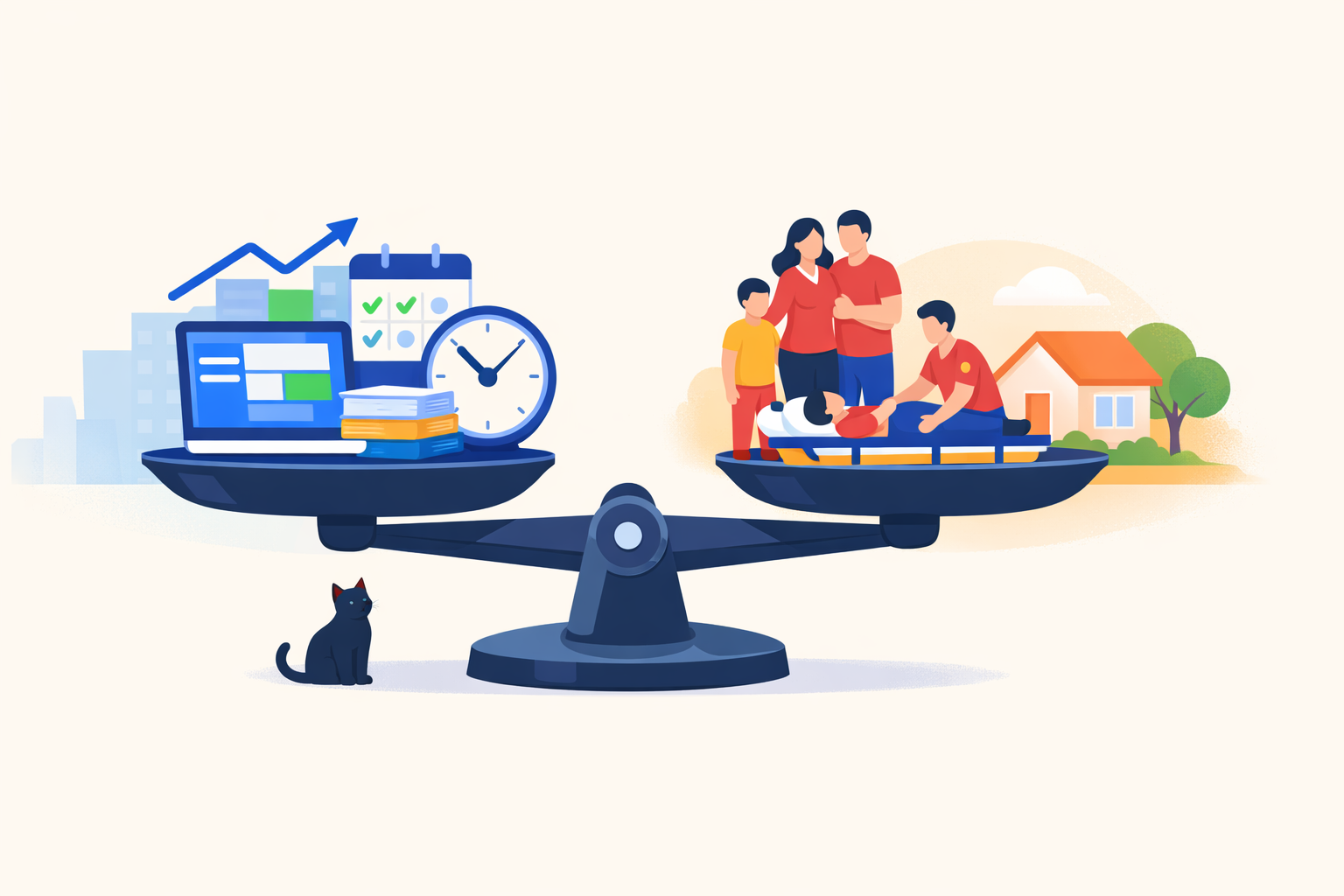
This is the fundamental tension of AI adoption in these sectors. The opportunity is massive, but the transition has to happen without breaking what already works. You cannot just swap in a new way of doing things and hope it holds. You need continuity.
Change management is not optional
Moving from one way of working to another, while the work itself cannot stop, requires a deliberate change management process. That means testing new workflows alongside existing ones. It means running trials to confirm that the new approach actually works before the old one is retired. It means building confidence across the team before asking them to rely on something unfamiliar.
Profit-driven organizations can move fast because they do not need to bring everyone along. They can absorb the disruption. They can afford some things to break while they figure it out. Institutions built for stability do not have that luxury. Government teams at all levels, many non-profits, and small businesses need to move methodically and deliberately, because the cost of failure is not a quarterly earnings miss. It is a service or a livelihood that people depend on going dark.
Everyone needs to move together
This is the part that gets underestimated. Large institutions will not succeed in adopting AI unless people at every level of the organization are moving in the same direction. It is not enough for leadership to decide that AI is the future. It is not enough for one enthusiastic team member to start experimenting. The entire organization needs a shared understanding of what these tools can do, how they will be used, and what the expectations are.
That does not happen by accident. It happens through structured coaching and training. The kind that meets people where they are, builds skills progressively, and gives everyone a clear path from where they are now to where they need to be. This will mean a sustained effort to bring the whole team along.
The workforce question
There is a reality that needs to be stated plainly. As these organizations adopt AI and improve their efficiency, the expectation for what every team member contributes will change. The people who engage with the learning, build the skills, and adapt their workflows will be the ones who thrive. The people who refuse to engage will find that the work has moved past them.
This is not about replacing people with machines. It is about raising the floor for what everyone is capable of. And the organizations that invest in coaching and training now, that give their people a real opportunity to build these skills, are the ones that will navigate this transition without losing their stability or their people.
AI belongs to the organizations that serve the public, support their communities, and do more with what they've got. To do that, we must bring people along for the change.