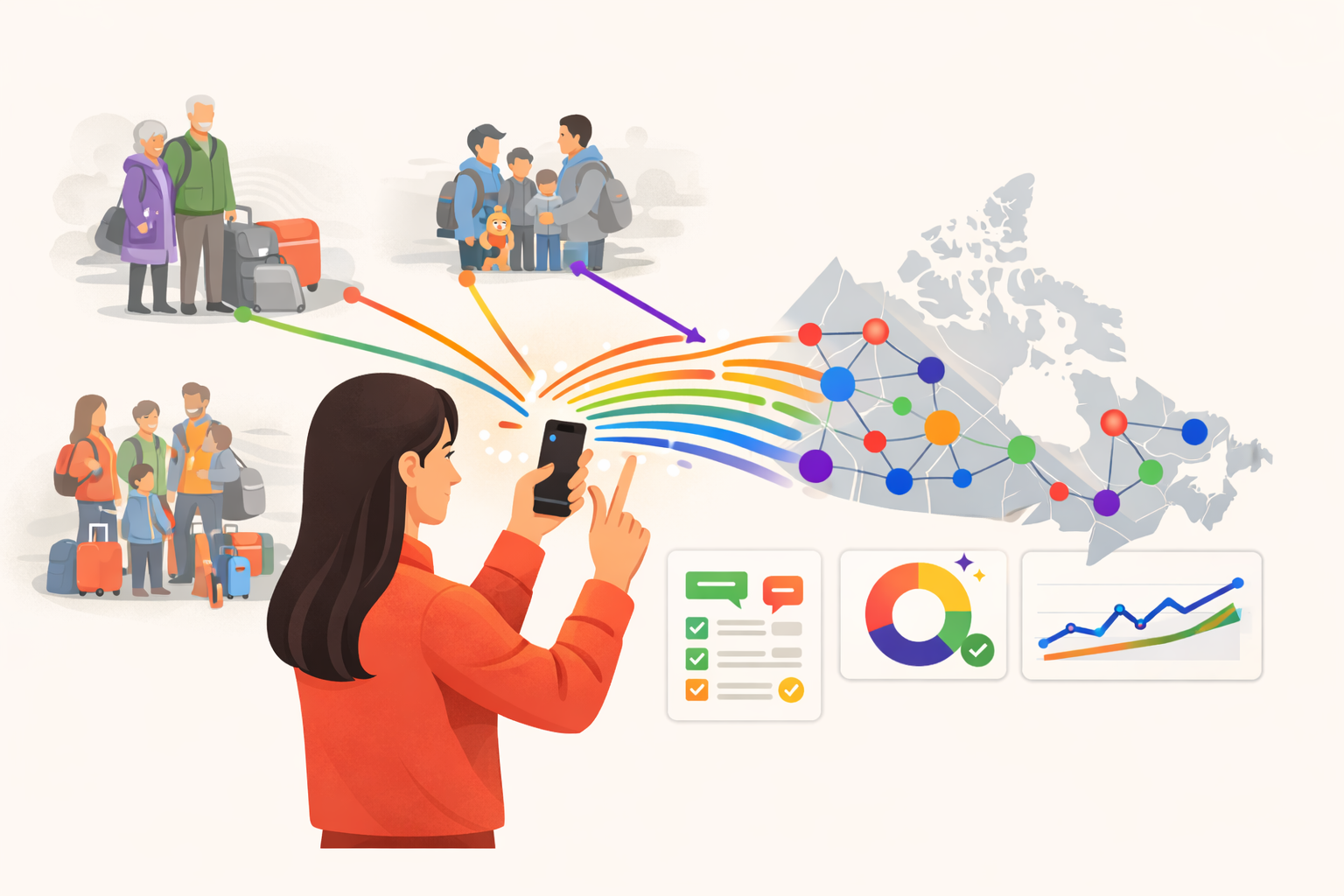
When a large-scale emergency hits -- a wildfire, a flood, a community-wide evacuation -- the first thing most organizations discover is that they have no way to account for their own people. Where did everyone go? Who has access to their work equipment? Who can work at all? These are the questions that decision makers need answered immediately, and existing HR or operational reporting systems aren't built to answer them.
Bridge the gap no system is built for
The tools we reach for in these moments are the ones we already have: spreadsheets to track who has checked in, shared documents for managers to update status, maybe a form link sent out by email. If we're lucky, someone with GIS skills can map where people ended up so leadership can actually see the scope of the displacement. Each of these pieces helps, but none of them talk to each other, and all of them depend on manual effort at exactly the moment when capacity is lowest.
The result is that getting a clear picture of workforce status takes days or weeks instead of hours. Information that is accurate on Monday is outdated by Wednesday. And the people responsible for pulling it all together are often displaced themselves.
You can't just shut something down and then expect the entire machinery to restart instantly. There are dependencies here that nobody understood until we tried to bring it all back online.
Communication channels fail when you need them most
When displacement stretches from days into weeks or months, the problem compounds. Living situations are temporary, jobs are shifting, and every existing communication channel fails in some way. Cell networks get overwhelmed. People in evacuation traffic are not checking email. Social media algorithms push the most-engaged posts to the top instead of the most recent ones, which means critical updates get buried under outdated information.
Organizations that go through this once learn hard lessons. But the core problem remains the same each time: there is no integrated system designed for the specific challenge of maintaining connection with a displaced workforce.
What we actually needed
What we needed was simple in concept: a way to reach displaced employees through whatever device they actually had with them (a personal phone, a personal laptop, nothing more), gather specific information about their situation, and assemble that into an intelligence picture that management could use to make decisions.
That intelligence picture would show: what percentage of the workforce is displaced, who has access to work equipment, who is able to work, which divisions are affected, and what the downstream operational impacts are. Layer in business-specific information (leave types, workspace availability in other locations, training qualifications) and suddenly you have a decision-making tool that lets you be genuinely agile in a crisis instead of flying blind.
You want to keep your people connected in the midst of an emergency.
This is buildable right now with AI skills
Here is the part that changes the conversation: all of this is buildable today using foundational AI skills. A secure form to gather employee information. An integration dashboard to assemble it into a picture that management can interpret and manipulate. A lightweight progressive web app that can be pushed to employees' personal devices so they have a trusted, secure communication channel that can reach people where they are.
None of this requires enterprise software procurement or a twelve-month implementation cycle. A person with the right AI skills and domain knowledge about their organization's operations can build a deployable business continuity toolkit.
- Begin with a simple secure form.
- The dashboard layers information together.
- A secure web app gives you a known, authenticated communication channel that works even when corporate email and cell networks do not.
AI skills are the thread that connects the pieces we've been cobbling together separately -- the forms, the spreadsheets, the mapping -- into something that actually functions as a system.
The encryption piece matters too. When you're asking displaced employees for sensitive and personal information in the middle of a crisis (their location, their capacity to work) they need to trust that the channel is secure and that the request is authentic. Building that trust into the tool, through verified domains, public-key authentication, and pre-loaded communication channels, is not optional. It's what makes the whole system usable when it counts.
The real barrier is not technology
The hard part is not the build. It's the change management. It's getting an organization to take business continuity seriously before the emergency arrives. It's getting the right person wearing the business continuity hat to think about these tools in advance, to pre-load communication channels, to ensure that managers have contact information that doesn't depend on systems that will be the first things to fail.
We learned after COVID that you cannot shut an operation down and expect it to restart instantly. We learned after every major displacement event that if you don't have connection points pre-loaded at the management level, you won't be able to find your own people. These are not hypothetical lessons. They are documented, repeated, and entirely preventable with the right preparation.
If you're feeling like your organization is behind in business continuity planning, these are skills that can take your organization from behind to prepared.
That is what these AI skills are for. Not to replace the thinking, but to make the thinking actionable at the speed that an emergency demands.