Organizations are investing in enterprise AI platforms. The procurement is underway, the vendor has been selected, and the rollout timeline is on the project plan. But there is a question that rarely gets asked early enough: once the tool is live, what exactly will your team members do with it?
This is not a technology question. It is a change management question. And the gap between deploying a tool and seeing results from it is almost always a gap in skill development and expectation-setting.
The expectation gap
When leadership decides to adopt an AI platform, there is usually a clear picture of the outcome they want: faster reporting, better analysis, fewer manual steps, smarter decisions. What is often missing is a clear picture of how those outcomes actually happen at the individual level. Which team members will use the tool? For which tasks? What will they be expected to produce that they weren't producing before?
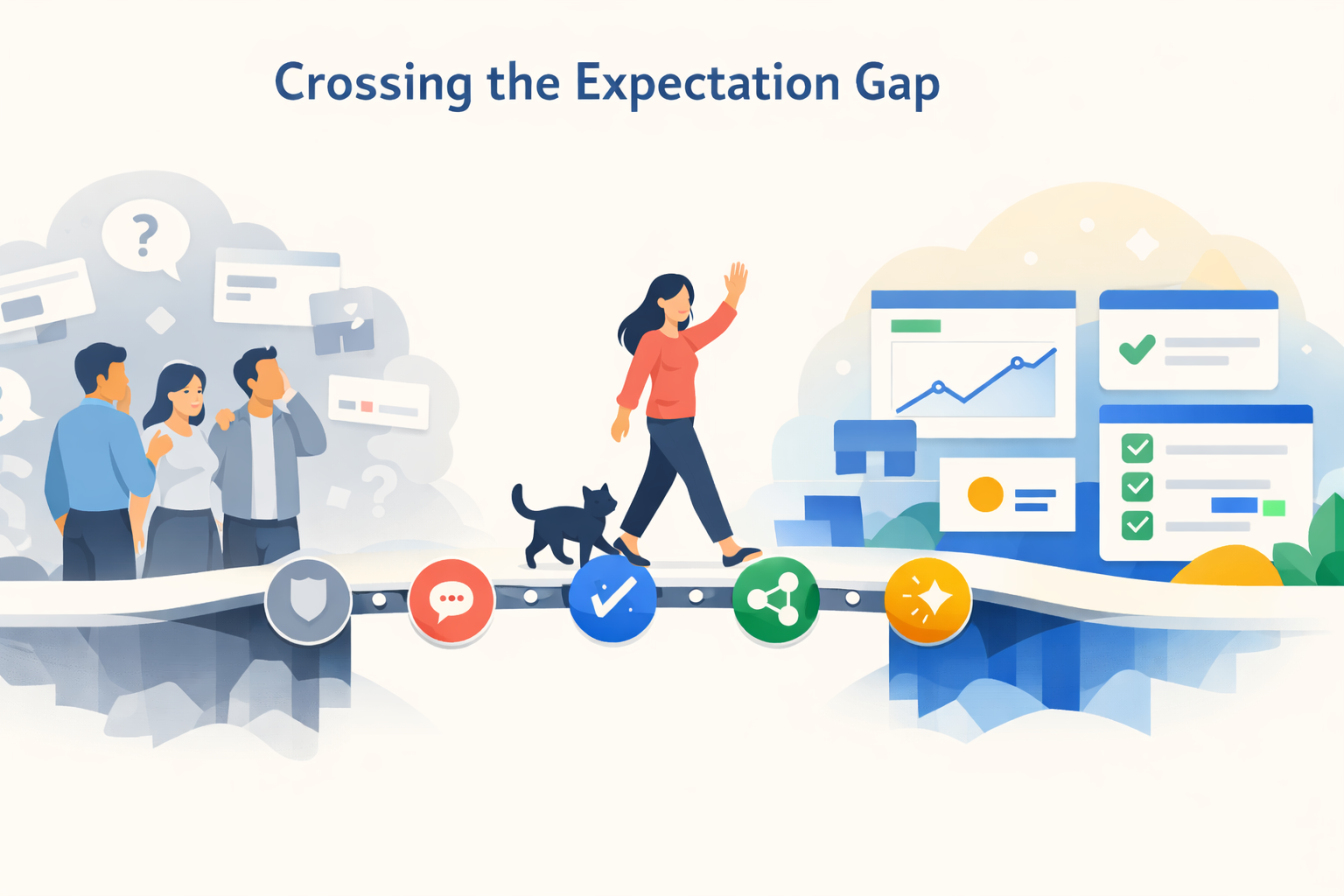
Without answers to those questions, the rollout creates an expectation gap. Leadership expects transformation. Team members open the tool, look at the interface, and are not sure where to start. The gap between those two realities is not closed by a better tool. It is closed by skill development.
The tool doesn't produce the result. The person using the tool produces the result. And that person needs to know what they're doing.
Fluency before features
AI tool fluency is not the same as knowing which buttons to click. It means understanding what the tool can actually do, what it cannot do, and how it fits into the work your team is already responsible for. It means being able to look at a workflow and identify which parts benefit from AI assistance and which parts still require human judgement. It means knowing when to trust the output and when to question it.
This kind of fluency does not develop from a one-hour onboarding session or a vendor demo. It develops from structured learning that builds progressively -- starting with foundational understanding, moving through practical application, and arriving at the point where someone can make independent decisions about how to use the tool in their own context.
Without that progression, you get one of two outcomes: either people avoid the tool entirely because they are unsure of it, or they use it without understanding its limitations and produce work that looks polished but hasn't been critically evaluated.
What your team actually needs to know
Before an enterprise AI tool goes live, your team should be able to answer these questions:
- What are the specific capabilities this tool gives me that I didn't have before?
- Which of my current workflows can I change, and which ones are outside my autonomy to change?
- What does a good output look like, and how do I evaluate whether the tool is giving me one?
- What are the security and privacy boundaries I need to stay within?
- When something goes wrong or produces an unexpected result, what do I do?
These are not questions the tool answers. These are questions that learning and skill development answer. And they need to be addressed before the tool is in people's hands, not after.
Autonomy depends on understanding
One of the promises of AI tools is that they give individuals more autonomy -- the ability to produce reports, analyze data, draft documents, or build workflows without depending on another team or a specialist. But autonomy without understanding is just unsupported risk. If someone doesn't know what the tool is doing under the surface, they can't make good decisions about when to rely on it and when to override it.
The organizations that get real value from AI adoption are the ones that invest in building genuine fluency across their teams. Not awareness. Not enthusiasm. Fluency -- the ability to use the tool with intention, evaluate its output critically, and adapt it to the specific demands of the work.
Aligning expectations with actions
Change management for AI is ultimately about alignment. Leadership has expectations about what AI adoption will achieve. Team members have actions they perform every day. The results depend entirely on whether those two things are connected -- whether the people doing the work understand what is expected, have the skills to deliver it, and have enough fluency with the tools to make informed choices about how to use them.
Skill development is the bridge. It is not an add-on to the rollout. It is the mechanism that turns a software deployment into an actual change in how your organization works. Without it, you have a tool. With it, you have a capability.
Enterprise software doesn't change organizations. People with the skills to use it do.