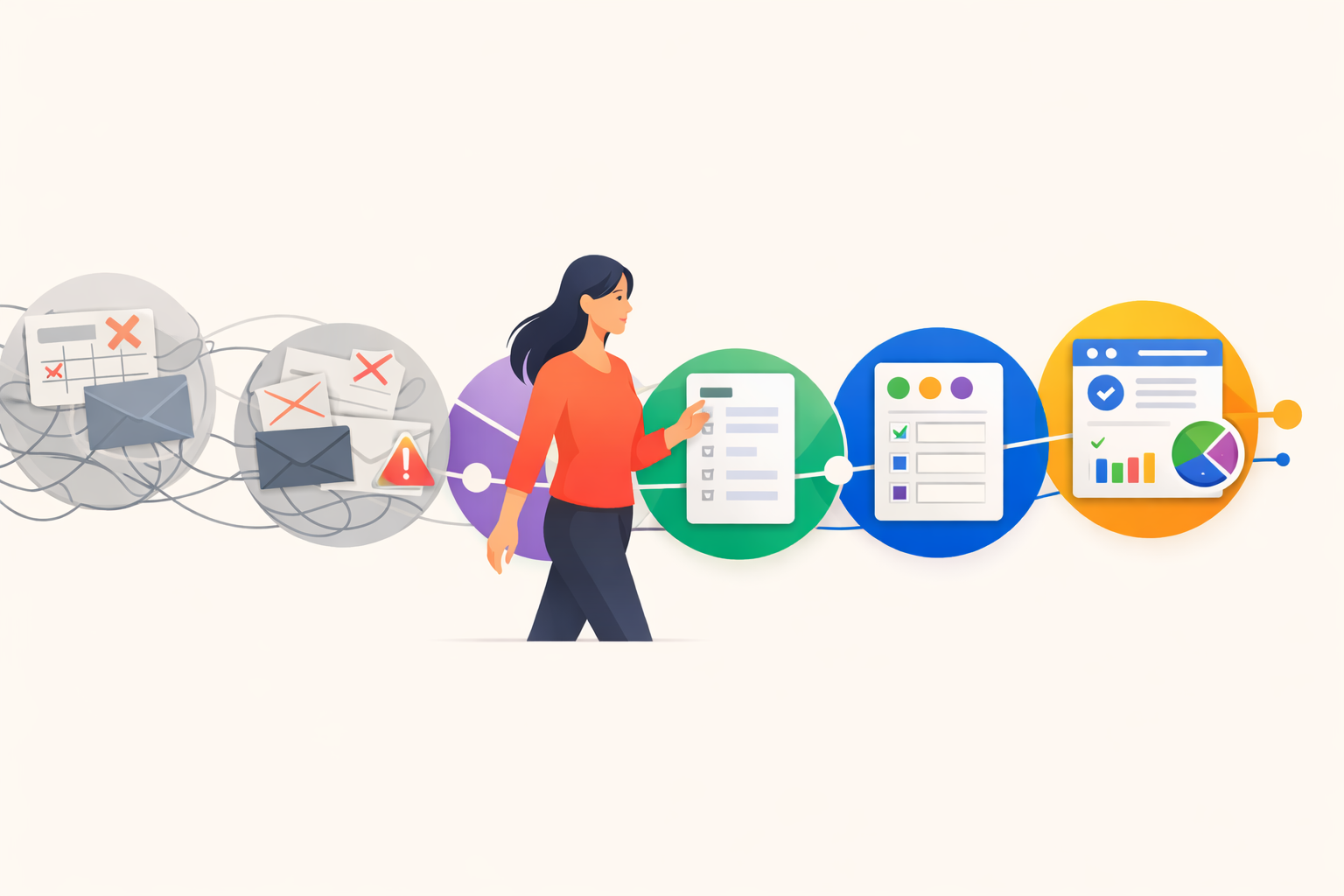
Every professional has a list. It might not be written down, but it's there: the things that don't work the way they should. The intake process that loses referrals between handoffs. The reporting that takes two full days when it should take ten minutes. The tracking spreadsheet that three people update in three different ways, and nobody quite trusts.
You've known about these problems for years. You've probably pitched fixes in meetings, sketched solutions on the back of agendas, or thought "if I could just build the thing I actually need, this would be solved." But building software wasn't your job. It required a developer, a budget, a timeline, and a level of organizational buy-in that never quite materialized.
That barrier is gone now.
Your domain knowledge was always the hard part
Here's what most people don't realize: the expensive part of building a tool was never the code. It was understanding the problem well enough to design the right solution. It was knowing which fields matter on an intake form, which status categories actually reflect how cases move through a pipeline, which reports a manager needs on a Monday morning versus a Friday afternoon.
That knowledge lives in the heads of the people doing the work. It always has been. What was missing was a way to turn that knowledge into something functional without needing to learn a programming language or hire someone who had.
The people closest to the problem have always been the best positioned to solve it. They just didn't have the tools. Now they do.
What's changed
AI tools have made it possible to describe what you need in plain language and get a working version back. Not a mockup. Not a requirements document that sits in a shared drive for six months. A real, functional tool you can use, test, and refine the same day.
Need a case management dashboard with status tracking and priority flags? You can describe it and have one. Need a hiring tracker that follows your organization's actual interview process? You can build it around the competencies and scoring criteria you already use. Need intake forms, feedback surveys, or a resource finder? Those are an afternoon's work now, not a procurement cycle.
The gap between "I know exactly what we need" and "here it is" has collapsed. And the person best qualified to close that gap is the one who understood the problem in the first place.
This isn't about becoming a developer
Let's be clear about what this is and isn't. Nobody is suggesting that program managers should become software engineers. You don't need to learn JavaScript or understand databases. What you need is a new skill set: the ability to communicate clearly with AI tools, evaluate what they produce, and iterate until the result matches what you need.
That's a learnable skill. It builds on things you already do every day: defining requirements, evaluating quality, giving feedback, and making decisions. The difference is that now, when you define a requirement, something gets built. When you give feedback, it gets revised. The loop between "this is what I need" and "here's a working version" is measured in minutes, not months.
What this looks like in practice
A program coordinator who's been tracking client referrals in a spreadsheet describes what she actually needs: a dashboard with status badges, case timelines, and the ability to click into a case and see everything in one view. An hour later, she has a working prototype. She tweaks the status categories to match her program's language. She adds a priority flag she forgot about. By the end of the day, she has something her team can use.
An HR manager who's been running hiring through email threads and shared documents builds a staffing tracker with job descriptions, competency scoring, interview notes, and a hiring board view. It follows his organization's actual process, not a vendor's idea of what hiring should look like.
A team lead who's been copying and pasting the same email templates every week builds a prompt library with templates, step-by-step workflows, and tips, all customized for her team's specific tasks.
None of these people wrote code. All of them built something real, because they already knew exactly what the problem was.
The mental list gets shorter
That list of things that don't work? It doesn't have to stay a list. Every item on it is a candidate for a solution you can build yourself, or learn to build with a bit of coaching and practice. The skills transfer. Once you've built one tool, the second one is faster. By the third, you're thinking differently about what's possible.
The organizations that will benefit most from AI aren't the ones with the biggest technology budgets. They're the ones where the people closest to the work are empowered to fix what's broken. Those people have been waiting for this moment, whether they know it or not.
You've spent years understanding what needs to change. Now you have the ability to change it.
If you're ready to start turning that list into working tools, coaching can help you get there. Not by teaching you to code, but by teaching you to build, using the knowledge you already have.